When models reach the shop floor
Where physical AI makes sense today and which rules apply to machinery from 2027
 Philipp PöschkeFounder, Paice
At a glance
- Of the German companies that used AI in 2025, only 6 per cent used it for the autonomous movement of machines; physical AI is still a small field overall.
- The easiest place to start is where tasks vary a lot and a single error has limited consequences, for example inspection with machine vision.
- From 20 January 2027 the Machinery Regulation applies and requires third-party assessment of learning safety functions; obligations under the Cyber Resilience Act run in parallel.
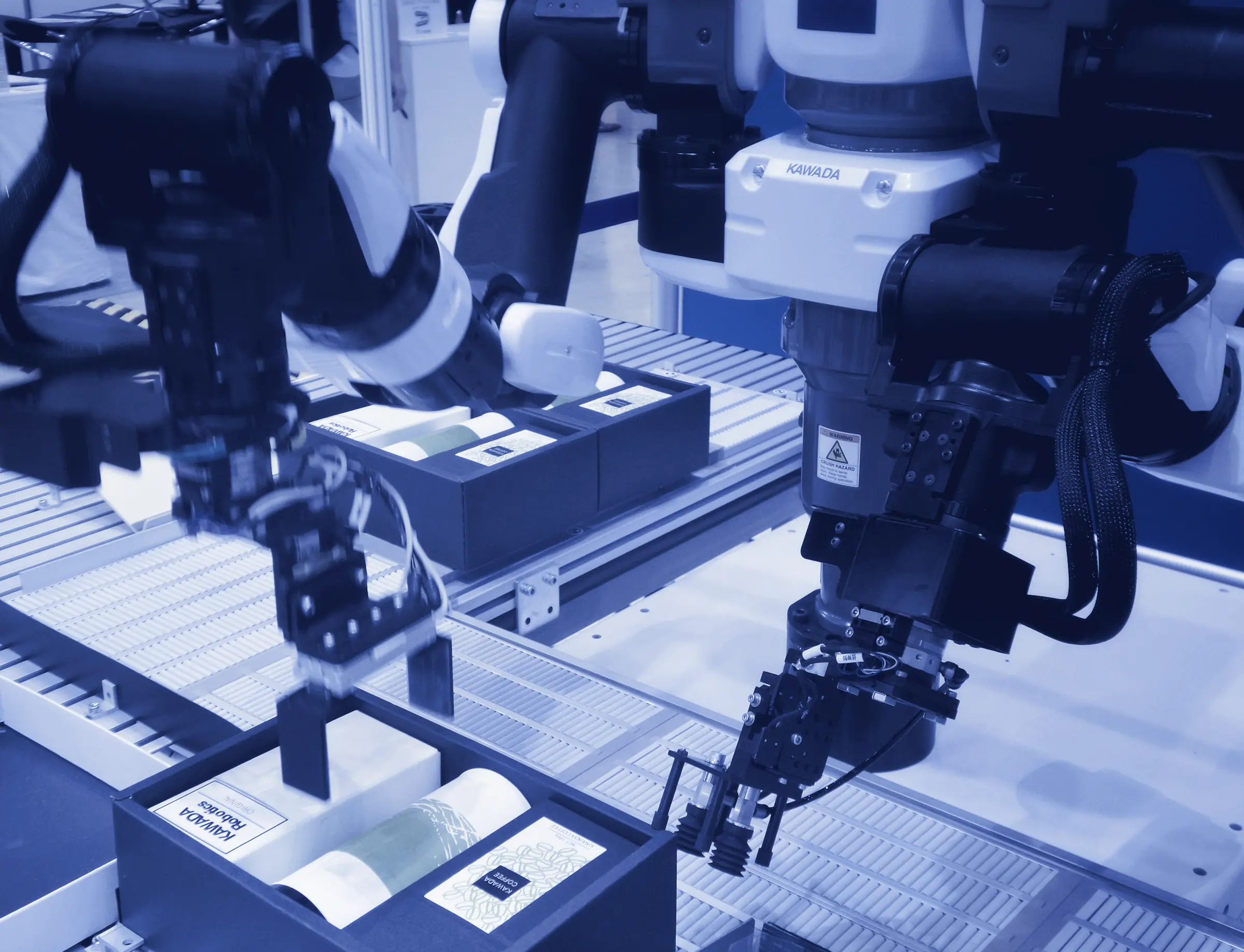
For a long time, AI lived mainly on screens. Now it is moving into machines, into cameras on the line, robot arms, vehicles and devices. This development is summed up under the term physical AI.
It is still small in breadth. Of the German companies that used AI in 2025, 52 per cent used it to analyse text, 17 per cent for image recognition and 6 per cent for the autonomous movement of machines, meaning robots, driverless vehicles or drones. For manufacturers and operators of machinery the topic is urgent all the same, because the rules change from January 2027.
What changes
Conventional automation follows fixed programs. It is precise and easy to safeguard, but inflexible. Models that see, grip and adapt can cope with variation: different parts, changing positions and new tasks. That makes automation conceivable where it used to be too expensive or too rigid, for example with small batch sizes.
In the AI delta model, physical AI is mainly a question of building. Between a convincing demo and continuous operation on a line lie safety, cycle time, maintenance and the people who work with the system.
Where deployment makes sense today
Two questions help with the choice: how much does the task vary, and what does an error cost? Where the task hardly varies, fixed programs are hard to beat. Where an error could endanger people, every learning component needs a safety concept and, if it takes on a safety function, third-party assessment from 2027.
Illustration: Paice
The bottom-right field is the natural place to start. It includes:
- Quality inspection with machine vision on the line, where a person decides on rejects
- Picking and handling of varying parts in guarded cells
- Assistance for maintenance and service, for example in finding the causes of faults
- Condition monitoring of equipment with analysis directly on the device
In many of these applications the model runs on the device itself or on a computer at the line, known as edge AI. There are three reasons for this. The response often has to come within milliseconds, faster than a round trip over the network. The equipment should keep running if the connection drops. And images from the shop floor, which may show employees, never leave the site. The price is limited computing power and a separate route for distributing models to many devices and updating them.
What's different from software
A software error can be rolled back. An error on a machine can injure people or destroy material. That's why behaviour in the event of a fault, response time and the limits of the working area belong in every assessment, before anyone talks about accuracy.
Then there are updates. In an office application a new model is progress; on a machine it is first of all a change in behaviour. Safety-related functions need a new assessment after an update, and maintenance has to plan for that. Finally, there are people on the line who clear faults, load parts and check results. They belong in the picture from the start, and so does the works council, which under Section 90 of the German Works Constitution Act (BetrVG) must be informed in good time about the planning of technical installations.
Which rules apply from 2027
As of 17 November 2026. Several sets of rules interlock for physical AI. The overview shows the key dates.
- 11 September 2026Cyber Resilience Act: reporting of actively exploited vulnerabilities and severe incidents
- 9 December 2026New product liability rules that explicitly cover software
- 20 January 2027Machinery Regulation applies; learning safety functions need assessment by a notified body
- 11 December 2027Cyber Resilience Act applies in full
- 2 August 2028AI Act: high-risk obligations for AI in regulated products under Annex I, only in limited form for machinery
Sources: Regulations (EU) 2023/1230, 2024/2847, 2026/1744, Directive (EU) 2024/2853; as of 17 Nov 2026
Machinery Regulation. Regulation (EU) 2023/1230 replaces the Machinery Directive from 20 January 2027. It captures AI through the concept of self-evolving behaviour. Safety components and embedded systems with fully or partially self-evolving behaviour using machine learning approaches that ensure safety functions are listed in Annex I, Part A. For these, a conformity assessment involving a notified body is mandatory. Manufacturers must also take the learning phase into account in the risk assessment and set its limits in advance.
AI Act. With the Omnibus (Regulation (EU) 2026/1744), the Machinery Regulation was moved to Section B of Annex I. As a result, the AI Act's high-risk obligations apply to AI in machinery only in limited form; AI-specific requirements are to come through amendments to the Machinery Regulation. For other regulated products under Annex I, such as medical devices, the high-risk obligations apply from 2 August 2028.
Cyber Resilience Act. Since 11 September 2026, manufacturers of products with digital elements have had to report actively exploited vulnerabilities and severe incidents. From 11 December 2027, Regulation (EU) 2024/2847 applies in full, including the requirements that must be met for CE marking.
Standards. The safety standards for industrial robots, ISO 10218-1 and ISO 10218-2, were published in new editions in February 2025. Part 2 now also contains the requirements for collaborative applications, in which people and robots share a working area.
This section is a general overview and does not constitute legal advice.
How to start safely
It starts with a well-defined use case and criteria that are fixed before building: the required recognition or gripping performance, the cycle time, the acceptable error rate and the behaviour when the model is uncertain. A prototype under real conditions, with real parts, real lighting and real cycle times, answers these questions faster than any study.
In parallel, it should be clarified whether the solution takes on a safety function. If it does, safety specialists and, where needed, a notified body should be involved from the start, because late certification can call the whole design into question. Only then is it worth investing in scaling. That covers maintenance, updates and training on the line, and the question of who monitors the model in operation.
That monitoring is no side issue. A model that was reliable at acceptance can get worse over time as lighting, materials or supplied parts change. It therefore needs a metric that shows such shifts early, such as the share of cases in which the model is uncertain, and a defined response. If the model is retrained, that's another change in behaviour, with all the consequences for the safety assessment.
The common view and ours
Physical AI is often discussed as a topic for the distant future, with humanoid robots and fully autonomous factories. We think the nearer horizon matters more. The obligations under the Machinery Regulation and the Cyber Resilience Act arrive in 2027, and most sensible entry points begin with machine vision on existing equipment. Companies that gain experience with learning systems there will be ready when the more demanding applications mature.
Sources
- Enterprises using artificial intelligence (AI) technologies, by employment size class, Federal Statistical Office (Destatis), as of 24 Nov 2025
- Regulation (EU) 2023/1230 on machinery, Official Journal of the EU, 29 Jun 2023
- Machinery Regulation (EU) 2023/1230 (Maschinenverordnung), Dortmund Chamber of Commerce and Industry (IHK zu Dortmund)
- Regulation (EU) 2026/1744 (Digital Omnibus on AI), Official Journal of the EU, 24 Jul 2026
- Regulation (EU) 2024/2847 (Cyber Resilience Act), Official Journal of the EU, 20 Nov 2024
- Ready, respond, report: the Cyber Resilience Act's reporting regime is here, CMS, 11 Sep 2026
- Directive (EU) 2024/2853 on liability for defective products, Official Journal of the EU, 18 Nov 2024
- ISO 10218-2:2025, Robotics – Safety requirements – Part 2, ISO, Feb 2025
- Section 90 BetrVG, Federal Ministry of Justice, gesetze-im-internet.de

Author
Get in touch